
Cold air from the vents while the furnace is running means one of two things: the blower is moving air but the burner is not lighting, or the burner lit and then shut itself off on a safety control while the blower kept going. Either way the furnace is not broken in the way it looks. Here are the causes in the order we find them.
1. The thermostat fan is set to On
On the thermostat, the fan setting has two positions: Auto, where the blower runs only when the burner is heating, and On, where it runs all the time. Set to On, the blower pushes room-temperature air through the ducts between heating cycles, and it feels cold coming out of a register. Switch it to Auto. This is the single most common cause and it costs nothing.
2. The furnace is still warming up
A furnace does not deliver hot air the instant the thermostat calls. The burner lights first, the heat exchanger warms for a minute or so, then the blower starts. On a high-efficiency unit the first air out can be cool for thirty seconds. If the air warms within two minutes, nothing is wrong.
3. A clogged filter has tripped the high-limit switch
A blocked filter starves the heat exchanger of airflow. The exchanger overheats, the high-limit switch cuts the burner to protect it, and the blower keeps running to cool it down: cold air. The furnace will try again in a few minutes and repeat. Replace the filter. If the air stays cold after a new filter and ten minutes, the limit switch may have locked out or failed, or the blower is weak; that is a repair call.
4. The flame sensor is dirty
The flame sensor is a small metal rod in the burner flame that tells the control board the gas has lit. Over a season it picks up a film of silica from the air and stops reading the flame; the board shuts the gas valve within a few seconds and the furnace tries again, three or four times, then locks out. From the vents you feel the blower running and no heat. Watch the furnace: if the burner lights and goes out after two to five seconds, it is almost always the flame sensor. Cleaning it is a ten-minute job for a technician and it is part of every annual tune-up.
5. The igniter has failed
A hot-surface igniter is a brittle ceramic element that glows to light the gas. They crack. The sequence then is: inducer fan starts, a pause where the igniter should glow, no flame, and the furnace locks out with the blower running. You may hear clicking. An igniter is a stocked part and a same-visit repair.
6. The pilot light is out
On an older furnace with a standing pilot, a blown-out pilot means no burner and cold air. The relighting instructions are on the label inside the panel. If it will not stay lit, the thermocouple has weakened and needs replacing.
Less common causes
- A blocked condensate drain or frozen vent pipe on a high-efficiency furnace keeps the pressure switch open and the burner off. See furnace not turning on for the checks.
- A gas supply problem: a closed valve on the furnace line, a propane tank run low, or a gas valve that has failed.
- Leaking or disconnected ductwork pulling cold basement air into the supply. The furnace heats fine; the air arrives cold. A duct sealing job rather than a furnace repair.
- A cracked heat exchanger. The furnace may run but trip repeatedly, and a technician will shut it down on finding the crack. This is the one cause to take seriously: it can let carbon monoxide into the house air.
What to do now
Set the fan to Auto, replace the filter, wait ten minutes. If the air is still cold, watch the furnace start: note whether the burner lights at all and how long it stays lit, and tell us. That one observation usually turns the visit into a single-part repair. In the Hamilton area the diagnostic is typically $99 to $149 and is credited against the work; if the house is below freezing and it is after hours, the emergency line is answered around the clock.
Written by the 365 Heat technical team as general information for homeowners and is not meant to serve as a diagnosis of your system. Call for advice on your own particular heating appliances.
Related services
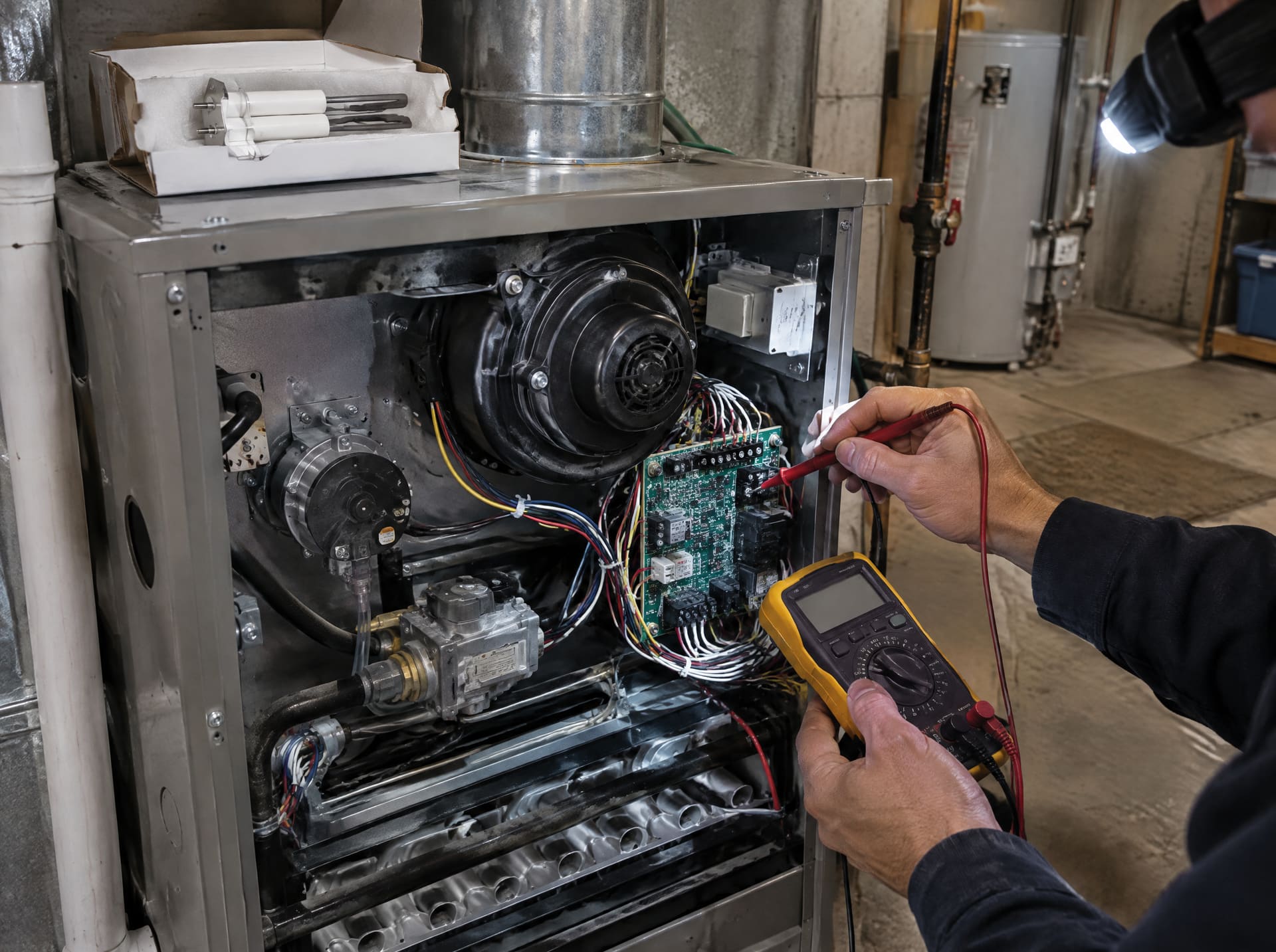
Repair
Furnace Repair
From a failed igniter to a seized inducer motor, we repair every make and model of gas and propane furnace. You get a straight diagnosis and a firm price before any part goes in. Same-day calls across Hamilton, Stoney Creek and the surrounding communities.
Learn more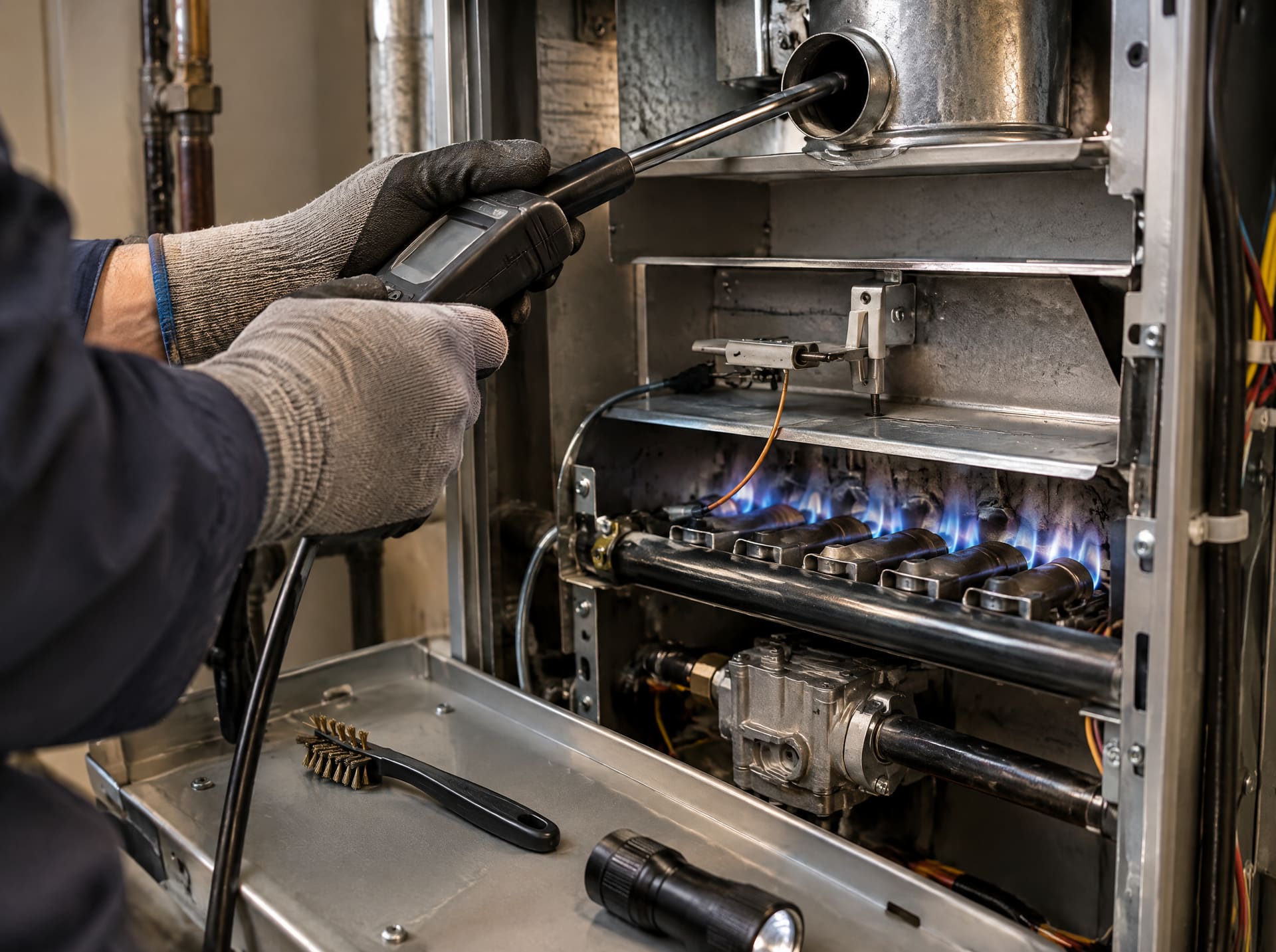
Maintenance
Furnace Maintenance & Tune-Ups
Furnaces fail on the coldest days because that is when they work hardest. An annual tune-up finds the worn igniter, the dirty flame sensor and the cracked heat exchanger before they find you. Tune-ups are booked across Hamilton, Ancaster and the surrounding communities.
Learn more


